
Periodontal Disease Doesn't Wait: Top Tips on Improving Your Veterinary Client Compliance — Part 2
The Veterinary Oral Exam: A Step-by-Step Approach
Maggie Burley, VTS (Dentistry), Clinic Support & Education, iM3 Australia | August 2025
Periodontal Disease Doesn't Wait: Top Tips on Improving Your Veterinary Client Compliance — Part 1 outlined the all-important questions to ask your client in gathering an accurate history of their pet’s dental habits. These questions focused on not only how the animal uses its mouth, but to gain an insight into your client’s willingness to perform home care.
The patient’s normal habits, and more specifically changes in those normal habits, can often lead us to discover incidence on oral pain. Oral pain tends to manifest itself through changes in the patient’s behaviour relating to eating or play habits, and how the animal interacts with its normal surroundings rather than choosing to stop eating altogether.
Now let’s focus on the Oral Examination itself.
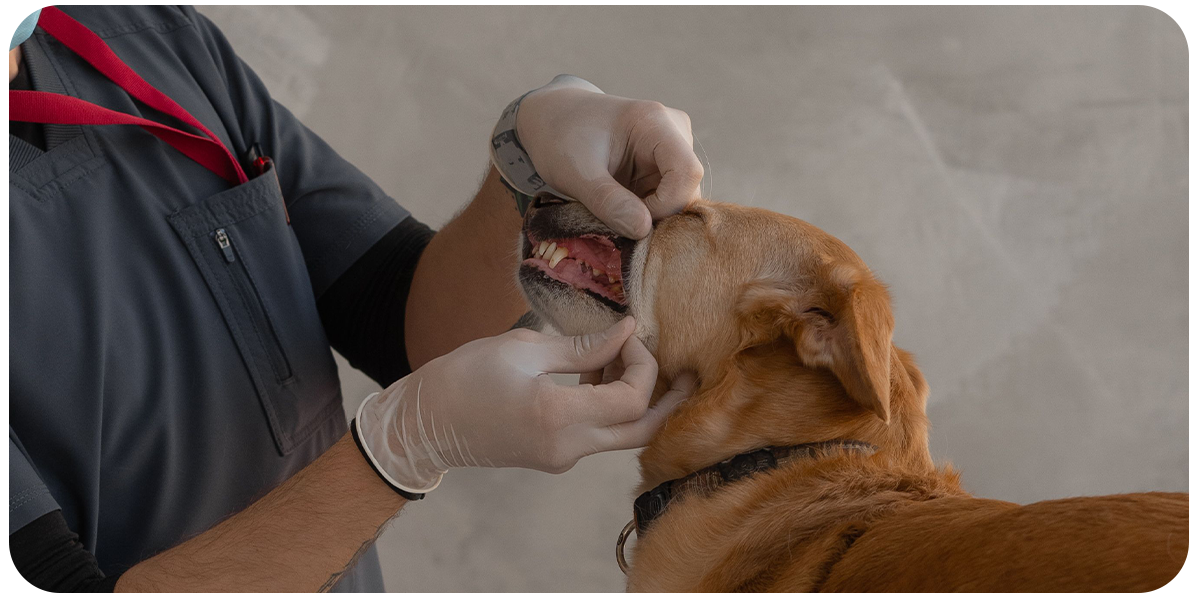
First Tip: Take Your Time
The first tip I’m going to give you is Time. Take time to perform the oral examination because it takes time to do it well. Now there are a couple of reasons why I say this. If the examination is inaccurate, then the estimate is also going to possibly be inaccurate.
This then leads to discontent from the client when expectations are not met, and changing the price mid-procedure catching the owner unawares is a sure-fire way to not meet those client’s expectations.
The more thorough you can be with your examinations – as thorough as you can be with some patients – the more likely your estimate in treatment required and the associated costs will be. Being thorough using a systematic approach means you are more likely to discover abnormalities that require further investigation under general anaesthesia.
This examination is somewhat subjective at this point, so at best you want to give some direction to your client as to where the treatment for this patient can lead.
The Oral Examination – simple steps to follow
Let’s look at a simple, easy way to follow systematic approach to the oral examination on the conscious patient:
1. Skull Assessment
The patient’s skull type can predispose them to certain conditions. You are probably acutely aware that patients that are bred to have malocclusions or crowded & rotated teeth are more likely to have a faster progression of periodontal disease.
Active mesiocephalic patients are more likely to experience traumatic injury or tooth wear. The skull type/shape can give you some clues as to what to expect to see within.
2. Asymmetry
In nature not all things are equal especially when there are conditions of the oral cavity. Look for any facial swellings, wounds or discharges and asymmetry of the face.
3. Bite Assessment
Malocclusions that cause trauma can often be difficult to assess. Assessing for malocclusions involves an examination of both sides of the mouth (closed) and a frontal view also. Look for any tooth-on-tooth contact, or tooth-on-soft tissue contact.
4. Oral Mucosa
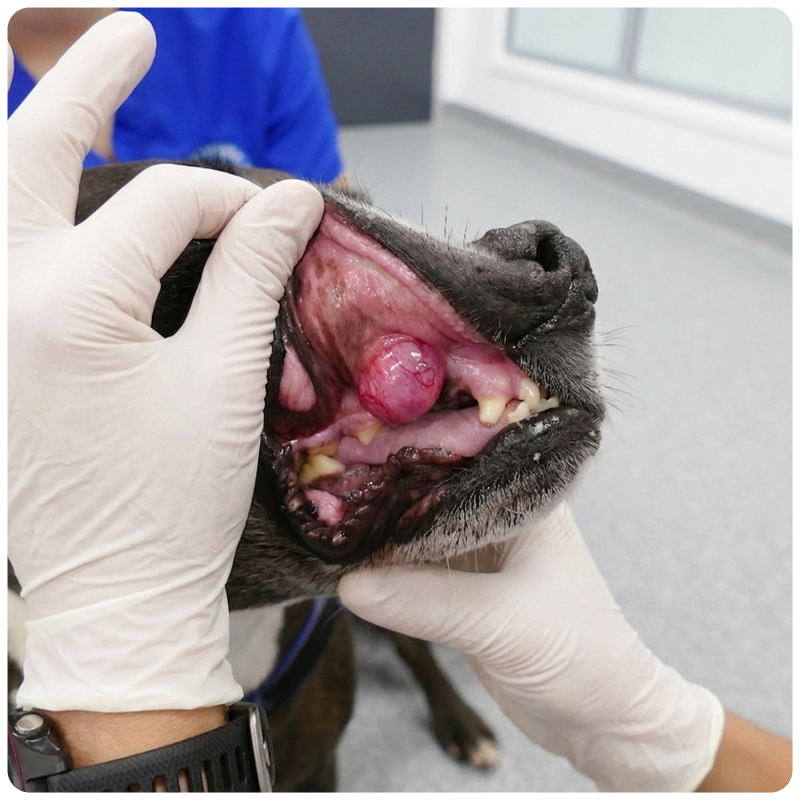
Assess the oral mucosa for inflammation, lacerations, oral masses, discolouration.
Assessment of oral masses can be complex requiring biopsy, surgical intervention, histopathology and discussions on treatment options. Look beyond gingivitis as many oral conditions can involve the oral mucosa.
5. The Dentition
Missing teeth, extra teeth, deciduous teeth, discoloured or fractured teeth. Assess the crowns as best you can looking for any of these variations that require further (radiographic) examination.
6. Halitosis
Finally, smell the halitosis! And assess whether it matches what you see. Keep in mind that some dental care products are aimed at masking malodour.
Client Communication
While performing your examination, talk your client through what you are doing, what you are seeing and what this means for the patient. Your client’s perspective on their pet’s oral health may be based solely on their experiences going to the dentist and if they have never experienced oral pain, or had any dental procedures performed on them, they may not be able to easily relate to what is going on with their pet.
Alongside this, avoid using industry jargon. Find simple and straight forward ways to explain the various oral conditions seen in our patients, use diagrams, point out key findings to help your clients better understand what has you concerned. Your client will walk away with a better understanding of their pet’s oral condition but will also trust more in your ability to properly treat and care for their pet.
